SKT
2025
Building an AI Stock Agent
Turning complex financial data into timely, trustworthy conversations
Overview
Turning complex financial data into timely, trustworthy conversations.
Adot is SKT’s AI assistant, used by 3M+ users each month. I designed Stock Agent, one of five key features introduced as part of Adot’s major relaunch.
Stock Agent helps everyday investors find and understand complex financial information without searching across multiple services. I shaped its conversational flows, in-app screens, and contextual prompts, from initial concept to post-launch improvements.
Problem
AI could hold a conversation. But could users trust it with their money?
At the time, AI models were good at natural, everyday conversations. More complex topics were different. Hallucinations made users hesitant to rely on AI for information that could affect important decisions.
Financial information made this trust gap especially clear. We saw an opportunity to ground the AI in verified data from our securities partner and make it useful for more serious, high-stakes needs.
Research
We focused on everyday investors who wanted to make informed decisions.
Adot’s user demographics closely matched those of individual investors. 68.6% of Adot users had also used a stock investing service within the past 30 days.
Our research revealed two recurring challenges.
01
Finding information at the right time
Users moved between trading apps, news, YouTube, and online communities to stay informed. Important updates were easy to miss.
02
Understanding what the information meant
Prices and disclosures were readily available, but context was not. Users often searched elsewhere to understand market changes and complex financial terms.
Design Approach
Make financial information timely, clear, and trustworthy.
Timely
Bring important updates to users before they have to search.
Clear
Turn complex financial information into concise, conversational explanations.
Trustworthy
Ground every response in verified data from securities partners.
Key Features
We turned verified market data into proactive updates, grounded and guided conversations, and scannable interfaces.
01
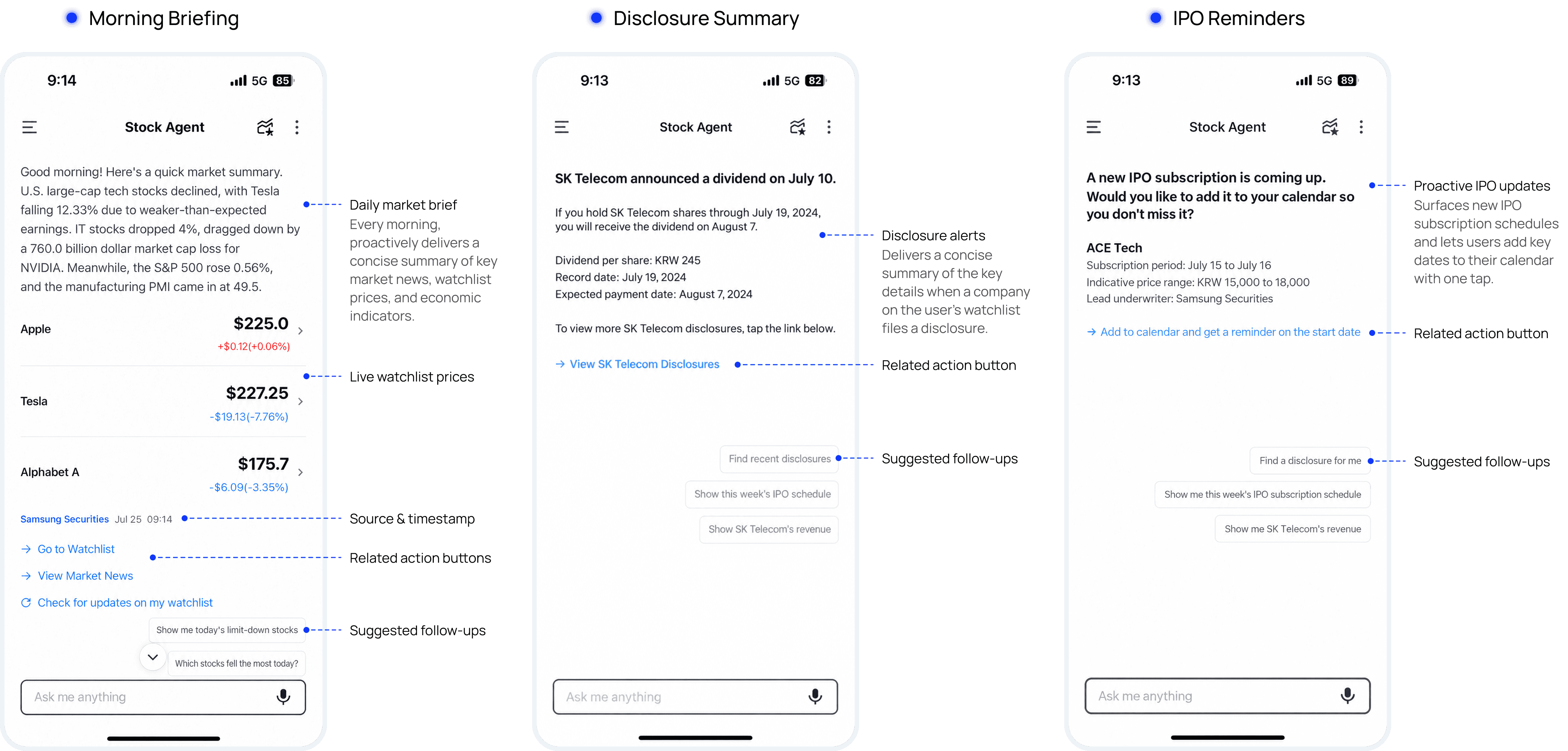
Stay informed without searching
Stock Agent proactively delivers updates based on each user’s interests. Morning briefings, disclosure summaries, and IPO reminders helps users catch important information at the right time.
02
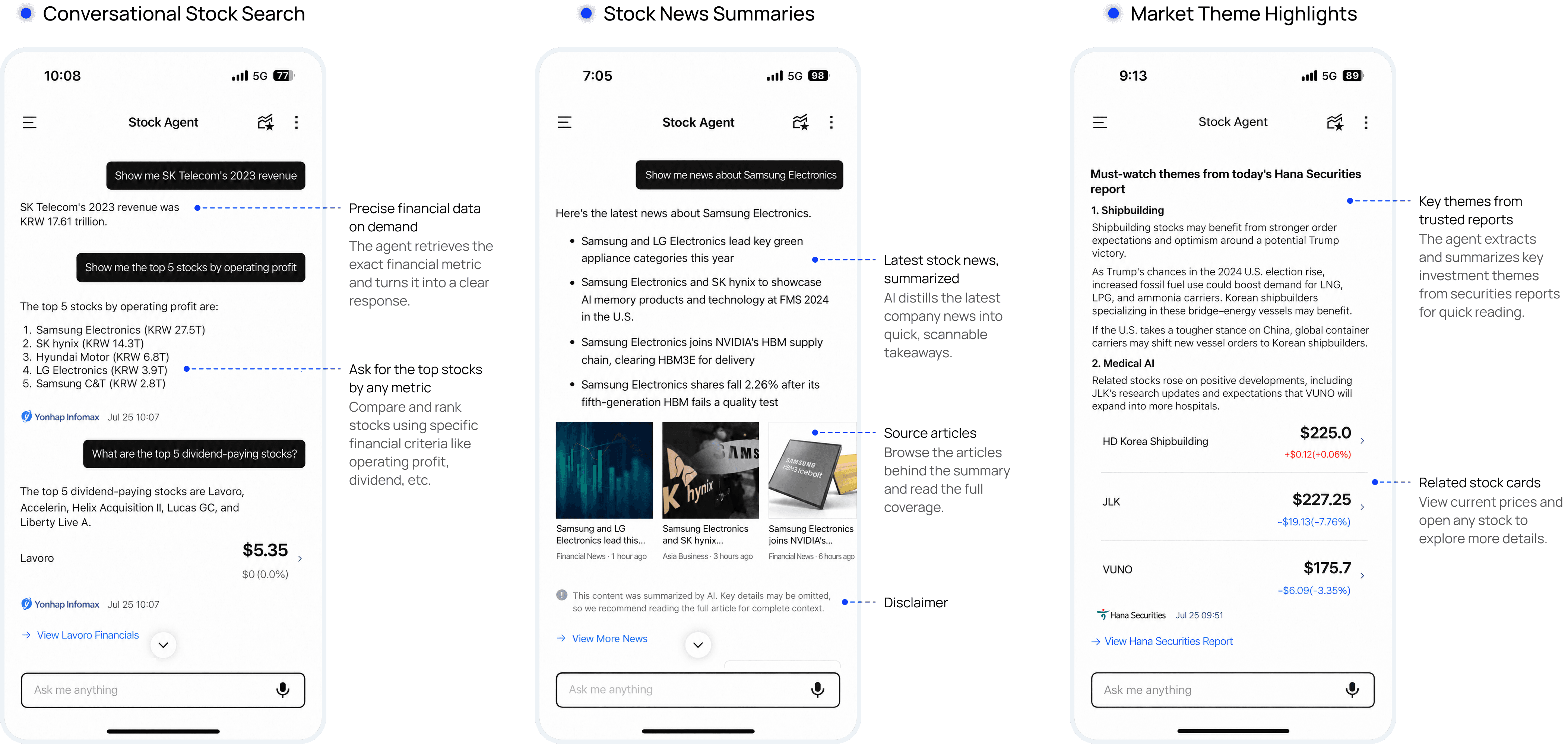
Ask naturally and get grounded answers
Users can ask about stocks, financial metrics, news, and market themes in everyday language. The agent grounds its answers in verified data and presents them in a concise, easy-to-understand format.
03
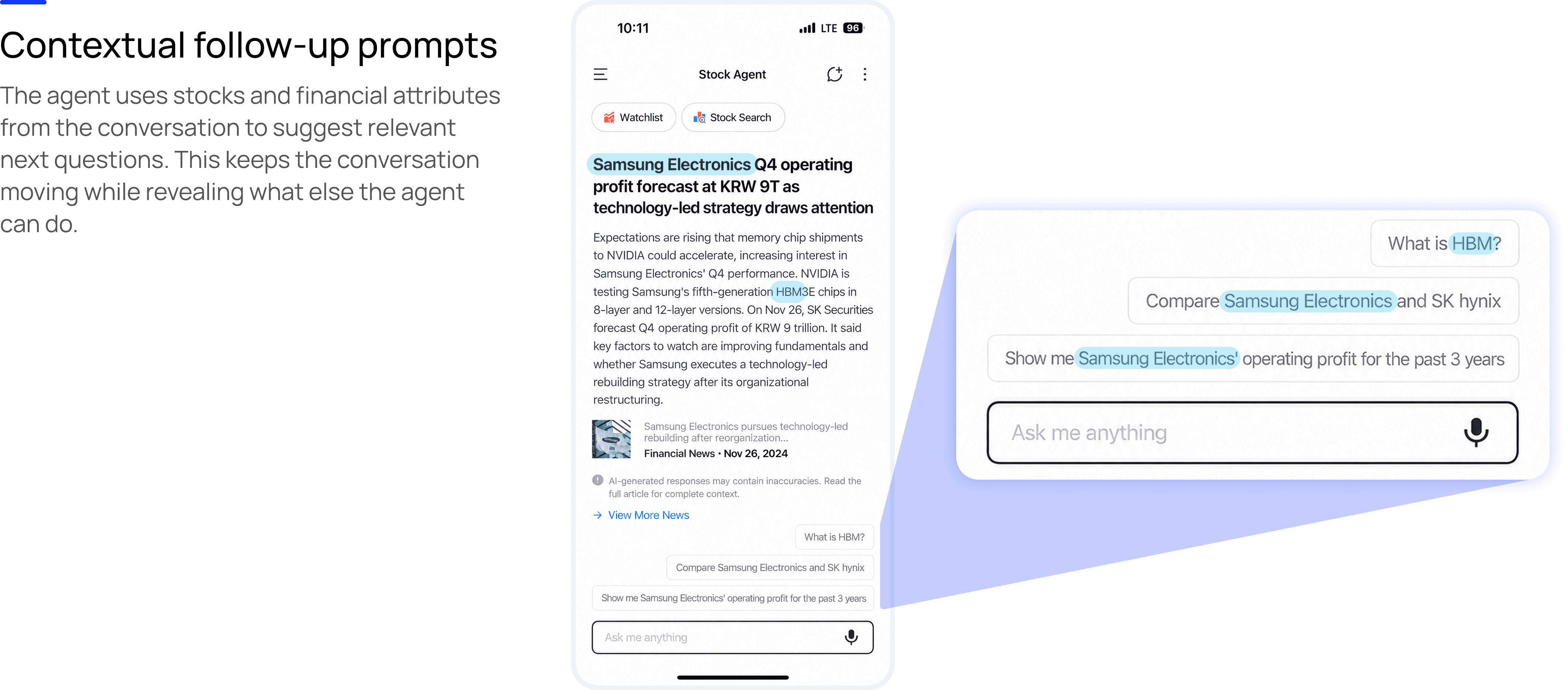
Keep exploring with contextual prompts
Users often does not know what else they could ask or how to continue after receiving an answer. I designed contextual follow-up prompts to reveal relevant paths forward. The system identifies stock names and financial attributes from the conversation, then suggests relevant next questions. This helps users discover more of the agent’s capabilities and explore topics in greater depth.
04
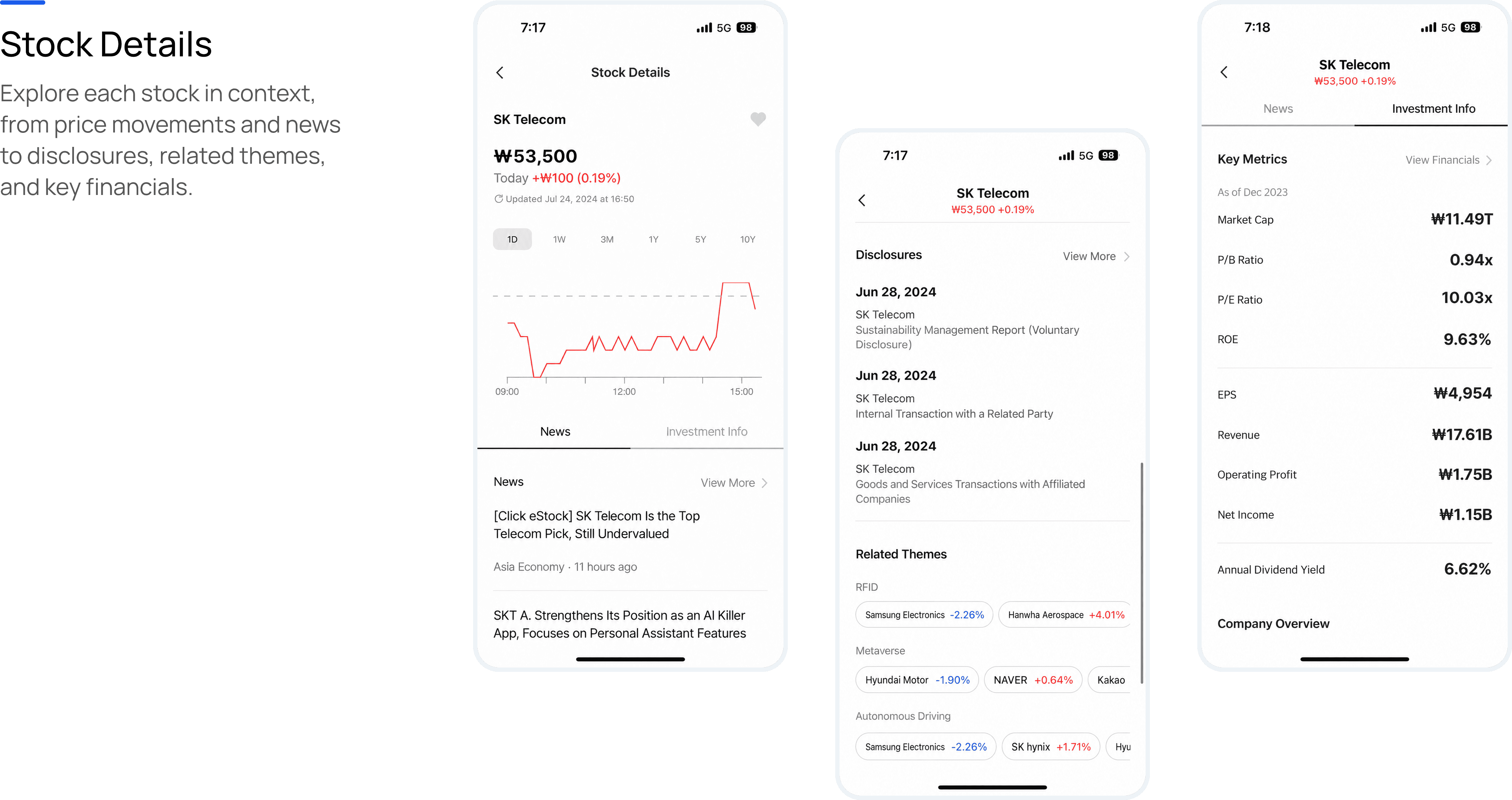
Go beyond the conversation
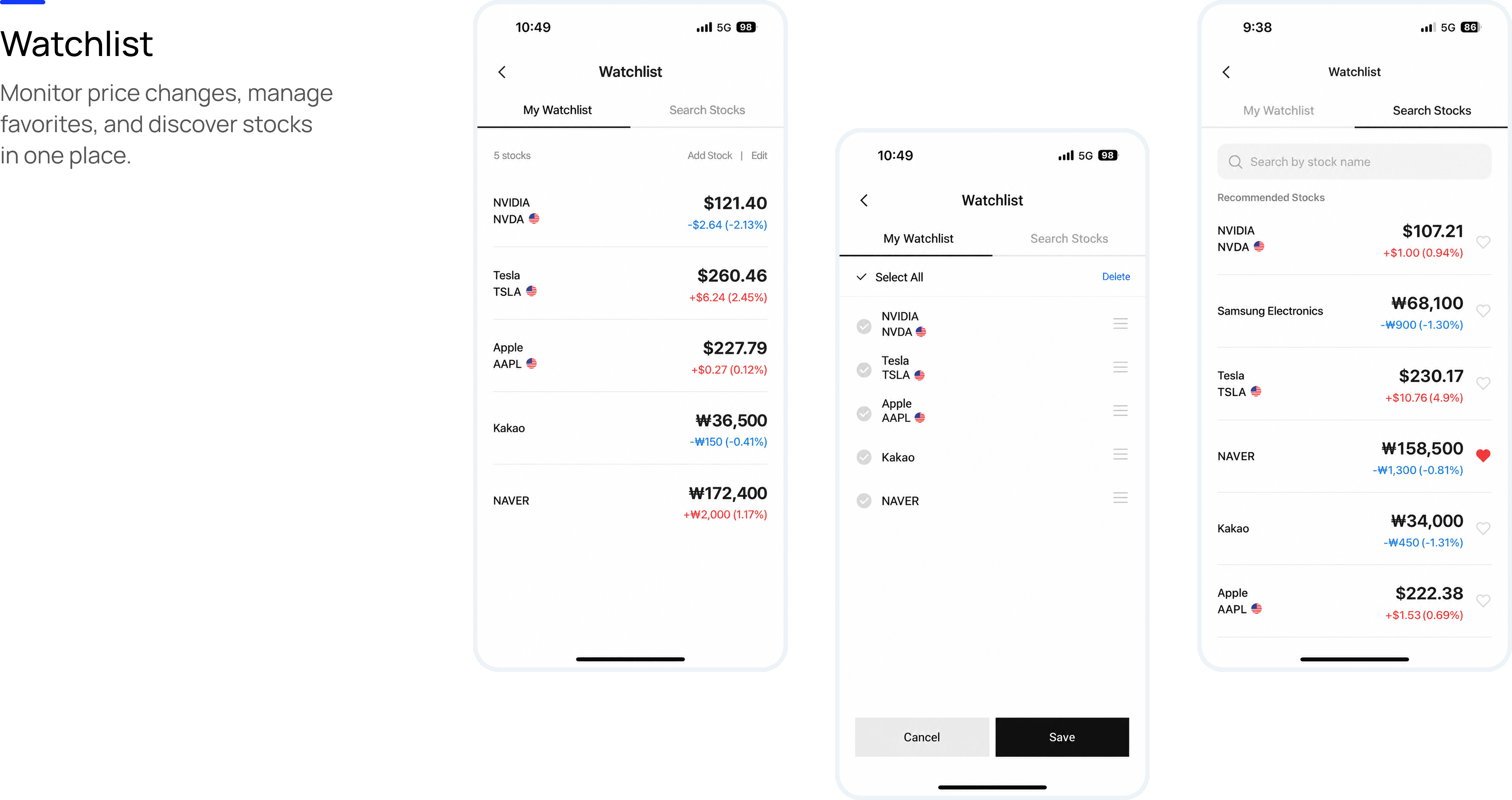
Not every piece of financial information works well in a chat. I designed dedicated screens for stock details and watchlists, making charts, news, disclosures, and financial statements easier to scan and compare.
Outcomes & Iteration
33,963 users in the first month
The Stock Agent launched in September 2024 as one of Adot’s flagship experiences. Within its first month, 33,963 users tried the feature.
Iteration
After launch, we found that returning users were asking more complex and detailed questions. We expanded the range of supported queries and made the Agent more flexible in handling follow-up conversations.
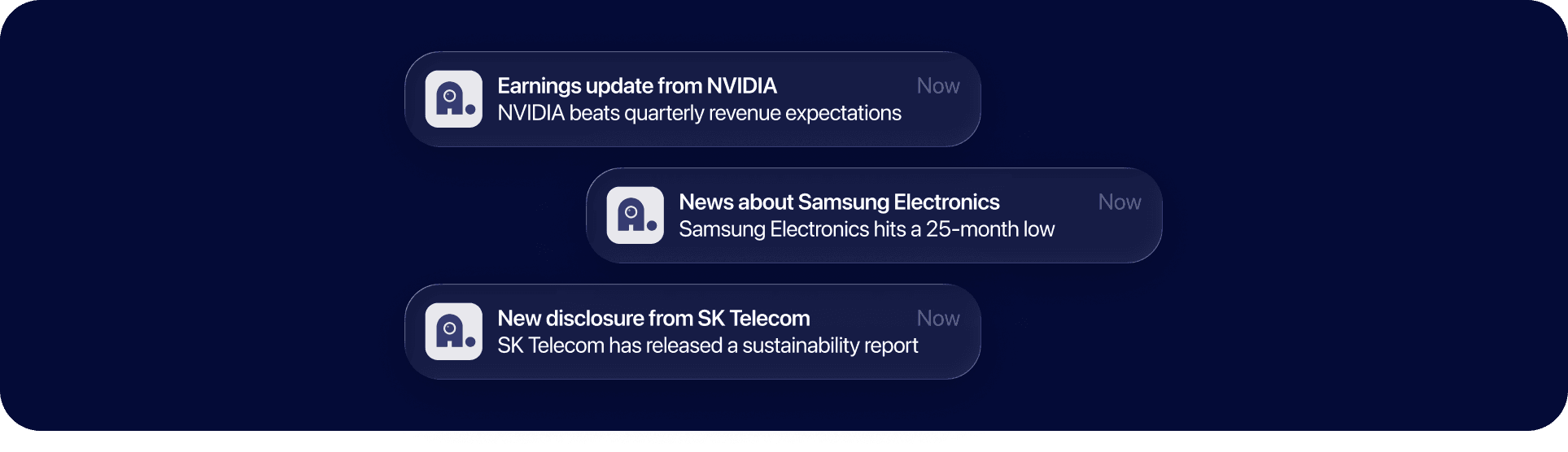
We also introduced timely news alerts for stocks on each user’s watchlist. Users could open a concise AI summary directly from the notification and quickly understand what had changed.
What I learned
This project changed how I think about AI product design. Trust is not created through conversation design alone. It begins with system-level decisions, from selecting reliable data partners and shaping the backend architecture to making sources visible and choosing the right format for each response.
As the feature moved from concept to launch, my role extended beyond designing interfaces. I worked closely with data partners, GUI designers, and front-end developers to connect product logic with the final user experience. I learned that designing an AI product also means building a shared understanding of how data, conversation, and interface work together.
The next opportunity is to understand how users build habits around the agent. I would examine which proactive updates and contextual prompts lead to meaningful engagement, then use those patterns to improve discoverability and personalization.
